


Ajuda
A participatory process is a sequence of participatory activities (e.g. first filling out a survey, then making proposals, discussing them in face-to-face or virtual meetings, and finally prioritizing them) with the aim of defining and making a decision on a specific topic.
Examples of participatory processes are: a process of electing committee members (where candidatures are first presented, then debated and finally a candidacy is chosen), participatory budgets (where proposals are made, valued economically and voted on with the money available), a strategic planning process, the collaborative drafting of a regulation or norm, the design of an urban space or the production of a public policy plan.
Striving towards safety while keeping the freedom
Innovation through Play
Work on the preparation of the deliberative process
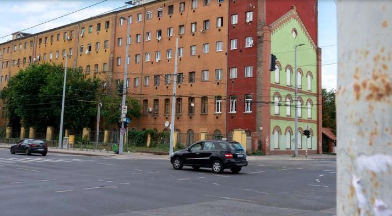
In preparation for the implementation of the workshop, a series of parallel activities had to be undertaken in order to create the right space for deliberation. One of the first things we did as a research team was an observation walk in Przemyśl, where we learned about important points for refugees…

Polish pilot - selection of a framework for individual processes
Due to the number of decisions that had to be made in order to create a deliberative process framework for the Polish pilot, we held a series of meetings with project partners to discuss the various issues. In the end, we decided on the following deliberative process using game and play methods:In t…
Polish Pilot - Choices on Shaping the Framework for Deliberation
After collecting data on the institutional and legal problems of the Ukrainian refugee community in Poland. The next step was to determine which of these problems the Polish pilot would serve. To this end, a series of meetings were held with partners to select the topic of the workshop and choose th…
Workshop 3 - support from institutions
Questions for the third workshop:What support do we receive in meeting our needs? And what support do we need to stand on our feet more firmly?During the final third workshop, the theme of difficult situations and challenges that may arise after arriving in Poland continued. Two parts were planned f…
Workshop 2 - Values, community needs
Questions of the second meeting:What gives us a sense of security and freedom?And what is a barrier to planning for the future in uncertain times? During the second meeting, the purpose of the activity and the deliberation that followed was to discuss the values of security and freedom in the contex…
Workshop 1 - self-organization and resources
Questions of the first workshop:What makes us feel strong and ready to face challenges? And what takes that strength away from us? For the first workshop, we created two forms of activities to allow people to deliberate on their personal resources, being in Polish centers. Individuals were given inf…
Quant a aquest procés
In partnership with the cities of Przemyśl and Warsaw, as well as the Association of Ukrainians in Poland organizing hospitality centers for war refugees from Ukraine, we will invite their inhabitants to engage in game-like and play-like interactions, which may facilitate answering the following questions:
What gives them a sense of security and freedom?
What is a barrier to planning for the future in uncertain times?
What makes them feel strong and ready to face challenges?
What takes away their strength?
What support do they receive to meet their needs?
What do they need to stand strong?
For three Saturdays in April, twenty-five people who had found shelter in Przemyśl and its surroundings or Warsaw in long-term care centres after the Russian invasion of Ukraine participated in activities designed to provide them with a friendly space for collective reflection and defining the conditions necessary to build a life after leaving the country at war.
Each meeting had two guiding questions posed from the perspective of the participants:
1. What gives us a sense of security and freedom? What is a barrier to planning the future in uncertain times?
2. What makes us feel strong and ready to face challenges? What takes away our strength?
3. What support do we receive to meet our needs? What do we need to stand on our feet more strongly?
The pilot participants met in the familiar spaces of one of the hospitality centres (Warsaw) and the Ukrainian House belonging to the Association of Ukrainians in Poland (Przemyśl), a place for cultural and social activities and an information point for refugees.
Organizers designed exercises to facilitate the exchange of experiences, knowledge and the expression of attitudes among people living in different hospitality centres. The deliberation took the form of a game-and-play design. The game design assumes building on the existing knowledge about the problem and choosing between alternative solutions. The play design is more open-ended and exploratory at the entry point. However, the two approaches can be creatively combined.
For example, in the exercise ranking the situations challenging Ukrainian refugees in their daily life in Poland, the participants randomly selected some challenges but also created some of their own based on their experiences. After they divided situations into resolvable and unresolvable, they worked together on step-by-step solutions to the former, leaving the latter to the institutions and organizations to respond during a direct interaction with the participants.
The activities were designed in cooperation with the Association of Ukrainians in Poland and organizational units of the local governments of Przemyśl and Warsaw, with the support of the Game Changers Academy. Before the process started, we also presented the pilot's goals and activities to potential participants during meetings in the hospitality centres in Warsaw.
The pilot is expected to bring practical conclusions regarding techniques for working with vulnerable groups and define their information needs and other institutional support. In the coming week, all pilot partners in Poland will meet to develop conclusions and a plan for further steps based on workshop materials, observation notes and feedback from refugees on the process.
Referència: inspire-PART-2024-10-1